
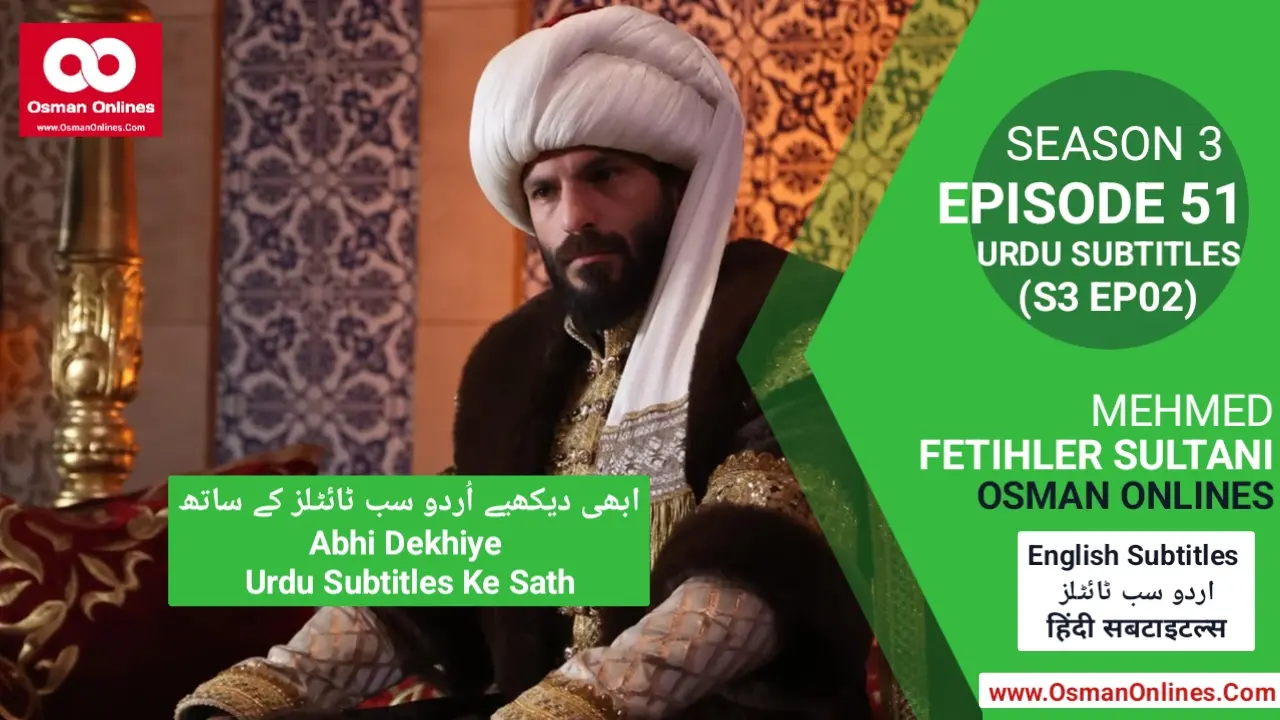
Mehmed Fetihler Sultani Season 3 Episode 51 With Urdu Subtitles
Mehmed Fetihler Sultani Season 3 Episode 51 With Urdu Subtitles
The historical drama Mehmed: Sultan of the Conquests continues to captivate audiences with its engaging storytelling and portrayal of one of the most influential rulers in Ottoman history. Season 3 Episode 51 carries the narrative into a crucial stage, weaving together palace struggles, political alliances, and the Ottoman Empire’s larger vision of conquest. For history readers and enthusiasts, this episode offers much more than drama it provides an educational glimpse into the challenges and decisions that shaped the empire.
The Central Theme of Episode 51
At the heart of Mehmed Fetihler Sultani Season 3 Episode 51 With Urdu Subtitles lies a test of leadership and loyalty. Sultan Mehmed must navigate the disobedience of his son, Prince Bayezid, while balancing the delicate politics of diplomacy, war, and faith. The tension is not limited to the palace it stretches into the Ottoman frontiers, with threats from Karaman, alliances with Pontus, and the mysterious relic hidden within Hagia Sophia.
Prince Bayezid’s Disobedience
Prince Bayezid, son of Sultan Mehmed, plays a central role in this episode. His defiance of his father’s orders creates ripples across the empire:
- Bayezid departs from his assigned duty, ignoring the strict instructions of the Sultan.
- His disobedience stirs unrest both among palace officials and the general population.
- Ayvaz Bey, the ambassador of Karamanid Sultan İbrahim, seizes this opportunity to demand Bayezid’s surrender.
This incident highlights a recurring historical reality: the fragility of dynastic unity in empires where princes were groomed for governance but often clashed with the central authority. Mehmed’s decision to put his own son on trial reflects the uncompromising discipline that defined his reign.
Diplomatic Tensions with Karaman
The Karamanids, long-standing rivals of the Ottomans, return to the center stage. Their ambassador, Ayvaz Bey, threatens war if Bayezid is not handed over. This diplomatic confrontation sheds light on three important aspects:
- Ottoman-Karaman Rivalry – Karaman served as a persistent rival power in Anatolia, often resisting Ottoman expansion.
- Foreign Alliances – Karaman found partners in other regional powers, including Pontus, to weaken the Ottomans.
- Mehmed’s Resolve – Instead of yielding to demands, Mehmed orders the ambassador’s execution, signaling the start of a greater military campaign.
This episode mirrors historical Ottoman policies: refusing to submit to external threats while transforming crises into opportunities for conquest.
The Mystery of the Hagia Sophia Icon
Among the palace intrigues and diplomatic challenges, another fascinating thread emerges the sacred icon discovered within Hagia Sophia. This relic holds both spiritual and political significance.
- It symbolizes the Byzantine legacy, still alive within the heart of Constantinople.
- Its appearance creates debates among leaders and raises questions of legitimacy.
- Sultan Mehmed dispatches Vlad and Karatuğlar to investigate further in Pontus, emphasizing its importance.
The inclusion of the sacred icon storyline blends history with mysticism, showing how religious relics could become instruments of political maneuvering.
Alliance of Pontus and Karaman
Pontus, under Emperor David Komnenos, forms a secret pact with Karaman, aiming to destabilize the Ottoman state. This alliance represents a classic geopolitical move: smaller powers uniting against a rising empire. Their goal is clear to incite the Turkmen lords against Mehmed and fracture internal unity.
This development also marks a pivotal moment for Mehmed. Instead of merely reacting to threats, he redirects his focus towards launching a decisive campaign.
The Pontus Expedition Opens
Episode 51 culminates in the decision to embark on the Pontus Campaign. This was not simply a military maneuver but a grand strategy with multiple purposes:
- Suppressing Internal Discord – Ending the influence of rival alliances.
- Eliminating Byzantine Legacies – Targeting the final remnants of Rome’s heritage on the Black Sea coast.
- Strengthening Ottoman Authority – Demonstrating the Sultan’s control over both family and state.
Mehmed’s execution of the Karaman ambassador becomes the symbolic gateway to this campaign, marking a new chapter in Ottoman history.
Table: Key Highlights of Episode 51
| Theme | Description |
|---|---|
| Bayezid’s Disobedience | Prince leaves his duty, creating unrest and challenging Mehmed’s authority. |
| Karaman’s Demands | Ayvaz Bey pressures the Ottomans for Bayezid’s surrender, threatens war. |
| Sacred Icon in Hagia Sophia | Discovery raises questions about power, faith, and Byzantine heritage. |
| Pontus-Karaman Alliance | Emperor David Komnenos and Karaman unite to destabilize the Ottomans. |
| The Pontus Campaign | Mehmed initiates a decisive expedition against the Black Sea strongholds. |
Historical Context Behind the Episode
While the series dramatizes events, it draws inspiration from real historical conflicts. Sultan Mehmed II, known as Fatih Sultan Mehmed or Mehmed the Conqueror, was not only the conqueror of Constantinople in 1453 but also a ruler who consistently sought to expand Ottoman power across Anatolia and the Balkans.
- Karamanids were a significant obstacle to Ottoman centralization in Anatolia.
- Pontus represented one of the last strongholds of Byzantine heritage in the region.
- Dynastic Challenges – The tension with Bayezid foreshadows the future struggles of succession that would continue in Ottoman politics.
Thus, Episode 51 is not only about palace drama but also about the broader vision of empire-building.
Mehmed Fetihler Sultani Season 3 Episode 51 With URDU Subtitles
Source 1:
Educational Insights for Readers
For students and enthusiasts of history, this episode provides key lessons:
- Leadership Requires Discipline – Mehmed’s decision to discipline his son reflects the balance between paternal affection and political responsibility.
- Diplomacy and War are Interconnected – The Karaman conflict shows how negotiations and threats could quickly transform into military campaigns.
- Symbols Matter in History – The sacred icon represents how relics, myths, and symbols influenced political legitimacy.
- Unity Against Alliances – The coalition of Pontus and Karaman demonstrates how smaller powers resisted empires, though often unsuccessfully.
Source 2:
Conclusion
Mehmed Fetihler Sultanı Season 3 Episode 51 With Urdu Subtitles captures a pivotal moment in Ottoman history, blending themes of dynastic loyalty, diplomacy, and conquest. The disobedience of Prince Bayezid, the pressures from Karaman, the alliance with Pontus, and the mystery of Hagia Sophia’s sacred icon all converge to set the stage for the grand Pontus Campaign.
For history readers, the episode is more than entertainment it is a reflective narrative on how leadership, discipline, and strategic vision shaped the legacy of Sultan Mehmed II. It reminds us that the making of an empire was not only about battles but also about difficult decisions within the palace and the symbols that guided political authority.
Key Takeaways
- Prince Bayezid’s defiance highlights the challenge of dynastic governance.
- Sultan Mehmed’s firmness shows the discipline required for empire-building.
- The Hagia Sophia relic symbolizes the lingering Byzantine influence.
- Pontus and Karaman’s alliance reflects regional resistance to Ottoman expansion.
- The Pontus Expedition marks a decisive step in consolidating Ottoman authority.
Frequently Asked Questions (FAQ)
Sultan Mehmed II, also known as Mehmed the Conqueror, was the Ottoman ruler who captured Constantinople in 1453, ending the Byzantine Empire and reshaping world history.
Prince Bayezid disobeys his father’s orders, creating unrest within the empire. His actions highlight the tensions between dynastic succession and central authority.
The relic discovered in Hagia Sophia symbolizes the Byzantine past and serves as a political tool in the struggle for legitimacy and influence.
The Pontus Campaign, initiated after the execution of the Karaman ambassador, was aimed at suppressing internal threats and eliminating the last remnants of Byzantine power in the Black Sea region.
The episode portrays real historical themes such as loyalty, diplomacy, alliances, and conquest, offering valuable insights into the strategies and challenges of the Ottoman Empire.