
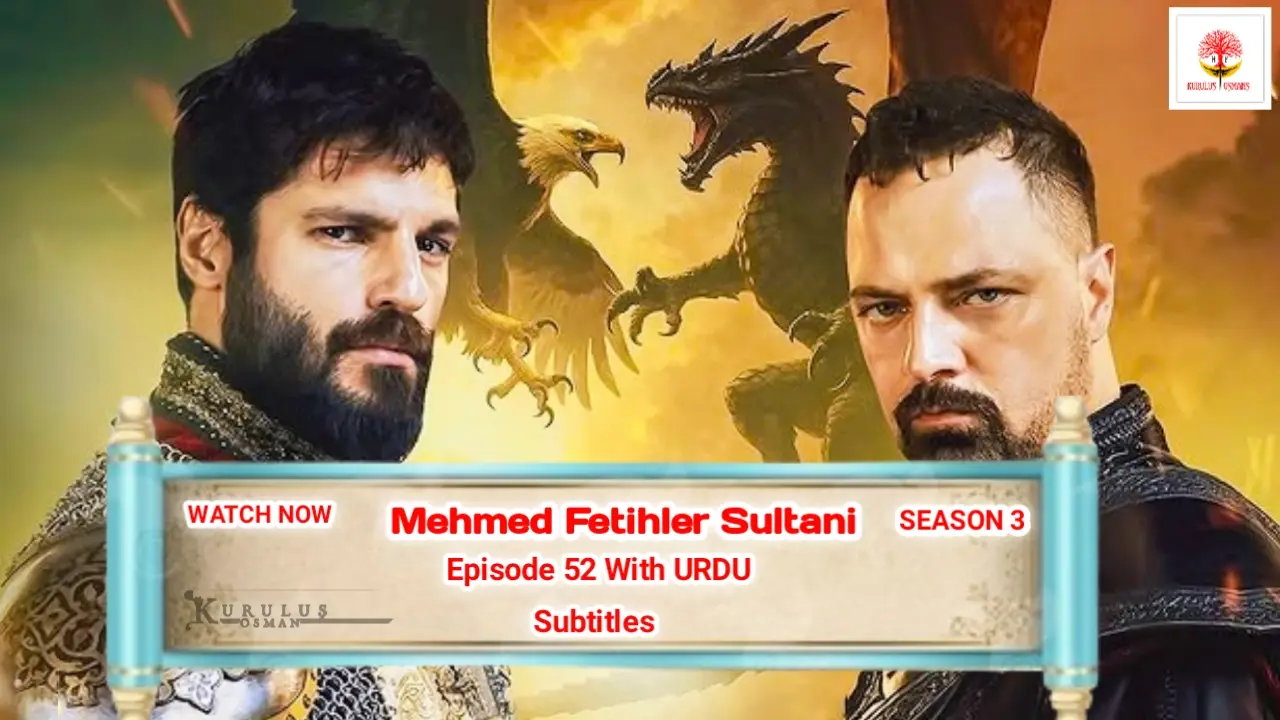
Mehmed Fetihler Sultani Season 3 Episode 52
The Turkish historical drama Mehmed: Fetihler Sultanı continues to captivate audiences with its intricate portrayal of Ottoman power struggles, political betrayals, and emotional family conflicts. Episode 52 brings together palace intrigue, international conspiracies, and deeply personal struggles that threaten the fragile balance of the empire. This installment does more than simply advance the plot; it sheds light on themes of loyalty, ambition, and the eternal cost of leadership.
Mehmed Fetihler Sultani Season 3 Episode 52
Sultan Mehmed’s Heavy Burden
At the heart of Episode 52 lies Sultan Mehmed, burdened by the ever-growing challenges both inside and outside his empire. While the empire expands in strength, his own household faces turbulence. His son, Şehzade Beyazid, becomes the source of great turmoil, forcing Mehmed to confront not only the dangers of foreign enemies but also the instability caused by his own bloodline.
The Sultan’s position in this episode demonstrates the paradox of leadership: while he is the embodiment of strength to his people, within the palace walls he remains vulnerable to betrayal, emotional turmoil, and the ambitions of others.
Quote: “A ruler’s heaviest battles are not fought with the sword, but with the hearts closest to him.”
The Fall of Ishak Pasha and Palace Shifts
One of the most shocking moments of this episode occurs when Şehzade Beyazid dismisses his trusted lala, Ishak Pasha. The move is both bold and reckless, disrupting the carefully maintained balance within the palace. Ishak Pasha’s removal is not merely a political reshuffle; it represents the growing gap between father and son.
For Beyazid, the consequences are emotional as well as political. Mehmed’s sharp words pierce his spirit, leaving him with a profound sense of grief. Viewers are reminded here that the bond between father and son, when entangled with royal power, becomes fragile and often destructive.
Rivalries in the Harem
While politics dominate the Sultan’s council, the harem becomes its own battleground. The conflict between Bahar Hatun and Gülşah Hatun escalates, revealing how even personal rivalries can ripple outward to influence imperial dynamics.
The harem in Ottoman history was never just a private space; it was a center of influence where alliances were formed and rivalries threatened stability. By showcasing this subplot, Episode 52 reflects how power struggles often extended beyond the battlefield, shaping the empire from within its most private quarters.
External Threats: The Pontus and Karaman Alliance
Outside the palace, danger looms from Pontus and Karaman, who seek to form an alliance against the Ottomans. This external threat highlights the constant vigilance required by the Sultan. Alliances such as these were historically common, as smaller states attempted to resist the growing power of the Ottomans through cooperation.
By weaving this into the episode, the series underscores the reality that Mehmed’s conquests were not solely about military campaigns but also about navigating fragile political landscapes.
Sacred Relics and the Shadow of the Vatican
Another layer of complexity arises with Vlad and the Karatuğ tribe, who embark on a treacherous quest for sacred relics. The relics, however, are also pursued by Komnenos and the Vatican, who weave bloody plots to secure them.
The symbolic weight of these relics cannot be ignored. In medieval politics, sacred artifacts were more than religious treasures; they served as tools of legitimacy and propaganda. Whoever held them commanded not only military power but also moral and spiritual authority.
The journey of Vlad and Karatuğ is fraught with peril, not only because of external threats but also because of divisions within their own ranks. Their story arc in this episode emphasizes the theme that the greatest struggles often come from within.
Süleyman’s Manipulation and the Seeds of Fitna
The drama intensifies as Süleyman, overwhelmed by grief over Julia’s death, blames Beyazid and begins sowing seeds of rebellion. By manipulating İsfendiyaroğlu Kasım Bey, Süleyman sets fire to the fragile stability within the Ottoman domain.
This manipulation represents the classic danger of unchecked grief and anger, which often translate into destructive political decisions. In Ottoman and Islamic history, fitna (internal strife) was viewed as one of the gravest threats to unity. The series captures this sentiment perfectly, showing how personal vengeance can ignite political unrest.
The Ambush and Beyazid’s Near Death
Perhaps the most emotionally charged sequence in Episode 52 is the ambush that leaves Şehzade Beyazid gravely wounded. Haunted by Julia’s memory, he finds himself torn between a thirst for revenge and the reality of his mortality.
This moment humanizes Beyazid, portraying him not as a mere political pawn but as a young man grappling with grief, guilt, and survival. His near-death experience acts as a turning point, not only for his character but also for the narrative direction of the series.
Sultan Mehmed’s Roar of Vengeance
The news of Beyazid’s injury reaches the palace and unleashes Sultan Mehmed’s fury. With his patience exhausted, the Sultan gathers the Janissaries in the grand cülus square and declares: “Gayrı vakit hainleri gazabımızla yakıp kavurma vaktidir!” (“Now is the time to burn traitors in the fire of our wrath!”).
This declaration marks a dramatic shift in the series. It is not just a call to arms but a symbolic representation of Mehmed’s resolve to extinguish both internal treachery and external threats. The shadow of war and vengeance now hangs heavily over the Ottoman throne.
Episode Highlights in Bullet Points
- Sultan Mehmed confronts internal unrest caused by Şehzade Beyazid.
- Ishak Pasha is dismissed, shaking palace stability.
- Rivalry between Bahar Hatun and Gülşah Hatun escalates in the harem.
- Pontus and Karaman pursue an anti-Ottoman alliance.
- Vlad and Karatuğ seek sacred relics, clashing with Komnenos and Vatican agents.
- Süleyman blames Beyazid for Julia’s death and manipulates Kasım Bey.
- Beyazid suffers severe wounds in an ambush.
- Sultan Mehmed declares a fierce call for vengeance, rallying the Janissaries.
Key Events in Tabular Form
| Main Event | Details | Impact | Characters Involved |
|---|---|---|---|
| Ishak Pasha’s dismissal | Beyazid removes his trusted mentor | Creates palace imbalance, angers Mehmed | Beyazid, Ishak Pasha, Mehmed |
| Harem Rivalry | Bahar Hatun vs. Gülşah Hatun conflict grows | Threatens stability within the imperial harem | Bahar Hatun, Gülşah Hatun |
| Quest for Sacred Relics | Vlad & Karatuğ face Vatican & Komnenos plots | Symbolic battle for legitimacy and authority | Vlad, Karatuğ, Komnenos |
| Sultan Mehmed’s War Cry | Calls Janissaries to arms in cülus square | Marks turning point toward vengeance and war | Mehmed, Janissaries |
Historical Resonance and Modern Relevance
The power struggles depicted in Episode 52 mirror real dynamics of Ottoman history, where rulers constantly juggled external wars and internal divisions. Sultan Mehmed, celebrated for conquering Constantinople, was as much a strategist of hearts and minds as he was a commander of armies.
For modern audiences, the episode resonates as a reminder that leadership is not simply about conquest or power. It is about managing emotions, loyalties, and the complex web of human relationships.
Fan Reactions and Future Predictions
Fans of Mehmed: Fetihler Sultanı are likely to view this episode as a turning point. The near-death of Beyazid, coupled with Sultan Mehmed’s war cry, sets the stage for explosive conflicts in future episodes.
Will Beyazid recover and grow into a stronger leader, or will his wounds deepen the divide with his father? Will Süleyman’s manipulations succeed in tearing the empire apart from within? And what role will the sacred relics play in determining the balance of power?
These questions will no doubt keep audiences eagerly anticipating Episode 53 and beyond.
Watch Mehmed Fetihler Sultani Season 3 Episode 51 With English & Urdu Subtitles By Clicking on the Button Below!!
Conclusion
Episode 52 of Mehmed: Fetihler Sultanı stands out as one of the most gripping chapters in the series so far. By blending personal grief, palace intrigue, foreign conspiracies, and symbolic quests, it paints a vivid picture of the challenges faced by Sultan Mehmed and his empire.
As the shadow of vengeance grows, the stage is set for battles that will test the strength of both ruler and realm. Viewers are left with a haunting question: can an empire built on conquest survive the storms within its own walls?
What did you think of Episode 52? Do you believe Beyazid’s near-death will unite or further divide the Ottoman dynasty? Share your thoughts in the comments below.
FAQs about Mehmed Fetihler Sultani Episode 52
The main conflict revolves around Şehzade Beyazid’s dismissal of Ishak Pasha, the growing rivalries within the palace, and Sultan Mehmed’s decision to declare war on both internal traitors and external enemies.
The conflict between Bahar Hatun and Gülşah Hatun reflects how personal rivalries within the harem could influence larger political dynamics in the Ottoman Empire.
The relics symbolize both spiritual legitimacy and political power. Vlad and Karatuğ’s pursuit of them creates tension with Komnenos and Vatican representatives, highlighting the fusion of religion and politics.
Enraged and out of patience, Mehmed gathers the Janissaries and declares vengeance, marking a decisive shift toward war and retribution.
The episode lays the groundwork for internal rebellion, external wars, and the possibility of deeper conflict between Mehmed and Beyazid. It sets the stage for intense developments in Episode 53 and beyond.
- Mehmed Fetihler Sultanı Season 3 Episode 52 Trailer 1: A Historical Reflection
- Kurulus Osman Chapter 165: The Struggle for Unity and Power
- Selahaddin Eyyubi Season 1 Episode 3 with English Subtitles – Full Recap & Analysis
- Mehmed Fetihler Sultani Season 2 Episode 16 with English Subtitles: Full Summary & Analysis
- Mehmed Fetihler Sultani Season 2 Episode 17 with English Subtitles: Full Summary, Analysis & Insights