
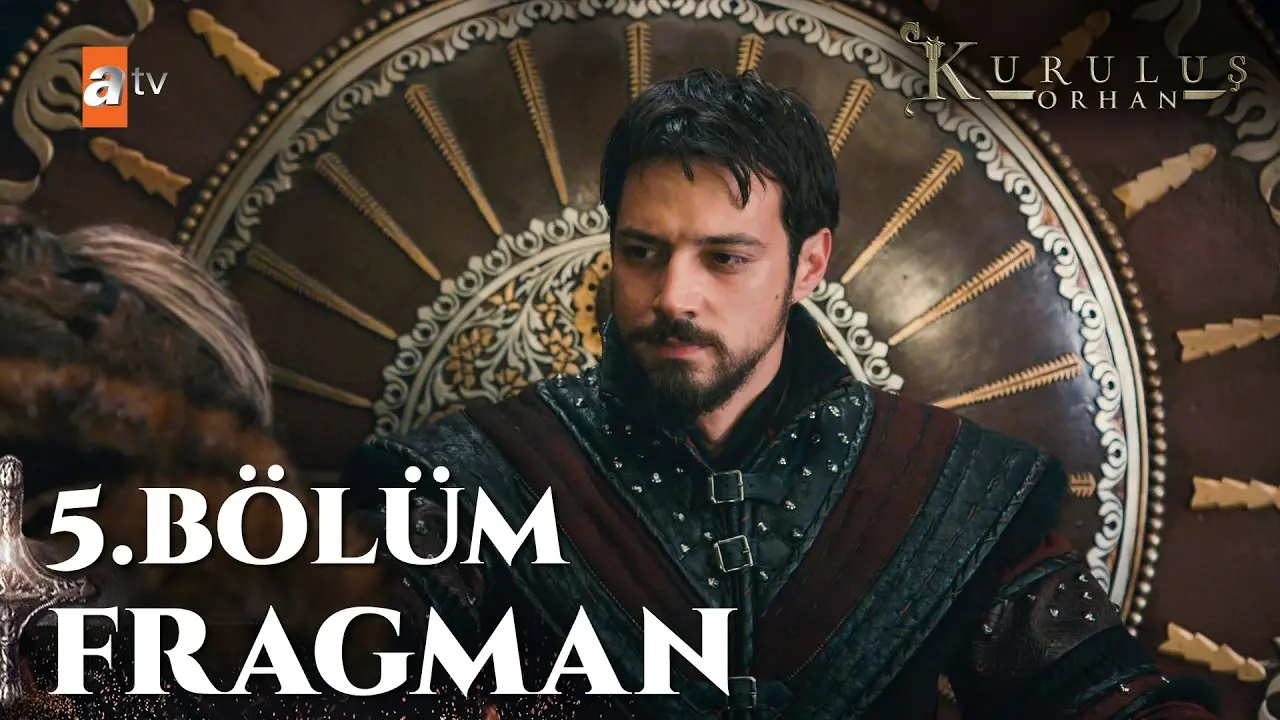
Kurulus Orhan Season 1 Episode 5 Trailer 1 With Urdu Subtitles
Orhan Bey’s Struggle for Unity and Power: A New Era of Trials and Transformation
Kurulus Orhan Season 1 Episode 5 Trailer 1 With Urdu Subtitles
Kurulus Orhan – A Fresh Angle Analysis Based on the New Turning Points
Introduction:
When Leadership Turns Into a Burden of Fire
Leadership in the world of early Turkish beyliks has always been a fierce test—one that demands more than strength, more than loyalty, and more than unbreakable courage. In this fictionalized but historically inspired narrative, the burden on Orhan Bey’s shoulders expands far beyond what a young leader could reasonably be expected to bear. Yet the more pressure the era exerts on him, the more clearly the shape of his destiny forms.
In this new, fully explored angle, the turmoil between brothers, the shadow of civil division, the psychological cost of leadership, and the cultural expectations surrounding rulers form the core of our analysis.
Orhan Bey and Nilüfer Hatun: A Journey Interrupted, A Destiny Tested
In this reimagined perspective, the ambush on Orhan Bey and Nilüfer Hatun is not just a physical trap—it becomes a symbolic representation of unity under threat. Such attacks in medieval Anatolian forests were more than military moves; they carried deeper political meanings.
Their journey, intended perhaps as a moment of reflection, romance, and strategy, transforms instantly into a battlefield. Nilüfer Hatun’s role in this narrative grows significantly richer when viewed through a cultural lens:
- Medieval Turkish women often carried diplomatic and emotional weight within leadership families.
- Their presence could pacify disputes, anchor leaders emotionally, and serve as political links with other tribes.
Here, Nilüfer Hatun’s support becomes the emotional backbone of Orhan Bey’s fight against fragmentation within the Kayı.
Kan Turalı and Abdurrahman’s arrival, meanwhile, serves as a narrative reminder that Turkish warrior culture operated on a code of lifelong brotherhood. When these characters break into the deadly trap, the story isn’t just about saving Orhan—it’s about protecting the dream of a unified state.
Table: Key Motivations Behind Orhan Bey’s Struggle
| Character | Core Motivation | Strategic Importance |
|---|---|---|
| Orhan Bey | End internal division and secure unity | Determines the future of the Kayı Beylik |
| Nilüfer Hatun | Support Orhan emotionally and politically | Stabilizes leadership during crisis |
| Kan Turalı | Warrior loyalty, code of honor | Protects Orhan and the state vision |
| Abdurrahman | Defense of the tribe | Ensures continuity of leadership |
| Temurtaş | Power consolidation | Threatens the beylik’s existence |
Temurtaş and Orhan Bey: A Dangerous Diplomacy
Orhan’s decision to meet Temurtaş despite the risk reveals his deeper understanding of leadership in crisis. Leaders in medieval Anatolia often faced situations where diplomacy meant walking into the lion’s den voluntarily.
But beneath this negotiation lies a subtler theme:
Does a leader preserve unity by challenging the enemy, or by challenging his own blood?
This new angle explores Orhan’s internal battle:
- His loyalty to the tribe vs. loyalty to tradition
- His duty as a son vs. duty as a future leader
- His desire for peace vs. the cost of confronting Temurtaş
The meeting becomes a battlefield of ideology, not swords. Temurtaş’s cold ambition fractures the political landscape, and Orhan must navigate a world where alliances shift like sandstorms.
Flavius and Fatma Hatun: The Dance of Vengeance and Fear
This subplot introduces a psychological contrast rarely seen in historical dramas.
Flavius, driven by the fire of revenge, steps into Söğüt with a plan that reflects the Roman-style precision of warfare—cold, calculated, merciless.
But something unexpected reshapes the angle: his hesitation towards harming Fatma Hatun.
This tension opens unique narrative layers:
- Flavius represents the external world’s obsession with dominance.
- Fatma represents the internal moral compass of the frontier tribes.
- Their conflict becomes a philosophical clash, not just a personal one.
Will vengeance overpower morality, or does fear of crossing certain lines stop even the most ruthless warrior?
The Yarhisar Massacre: When a Tribe Feels the Pain of History
The attack on Yarhisar carries historical echoes reminiscent of real Mongol incursions and Ilkhanid punishments across Anatolia. In this refreshed interpretation, we explore how:
- Such massacres were strategic tools, intended to crush morale
- Tribes often relied on tight social structure for survival
- The emotional toll of losing warriors reshaped political decisions
Malhun Hatun’s confrontation with Alaeddin resonates with the fierce maternal leadership seen in Turkic history. Women often became the voice of tribal conscience, reminding men that personal rivalry could invite the enemy’s wolves.
Her warning, in this context, becomes prophetic:
“When brothers fight, it is the enemy who feasts.”
Kurulus Orhan Season 1 Episode 5 Trailer 1 With Urdu Subtitles
Kurulus Orhan Season 1 Episode 5 Trailer 1 With Urdu Subtitles#KurulusOrhan #OrhanBey #NiluferHatun #KayiObasi #TurkishSeries #HistoricalDrama #OrhanVsAlaeddin #Temurtas #Yarhisar #Flavius #FatmaHatun #TurkTarihi #OsmanliBegleri #KurulusOrhanEpisode #DirilisSpirit #Turkish pic.twitter.com/Ewi4QHZhzv
— Kurulus Osmans (@Kurulus_Osmanss) November 22, 2025
Alaeddin vs. Orhan: When Blood Turns Into a Battlefield
This moment marks the emotional climax of the narrative.
Two brothers—raised under the same roof, guided by the same legends, shaped by the same father—stand face to face with fists instead of respect.
What makes this angle unique?
1. Historical Reflection
Sibling conflict is a recurring theme in Turkish political history. From the Seljuks to the Ottomans, brothers often became rivals for power because unity meant survival.
2. Psychological Breakdown
Alaeddin’s command for Orhan to go to Karacahisar reveals:
- His fear of losing influence
- His growing insecurity
- His resentment toward Orhan’s destiny
3. The Breaking Point
Their fistfight in the heart of the tribe becomes symbolic of the beylik ripping itself apart.
When Alaeddin finally exiles Orhan, he believes he is restoring order—
but in reality, he is lighting the fuse of a deeper rebellion.
Quote Highlight
“A tribe divided by jealousy cannot stand against an enemy united by ambition.”
Key Takeaways
- Orhan stands at the center of a political, emotional, and familial storm.
- Nilüfer Hatun’s role becomes more influential than battlefields can show.
- Temurtaş uses fear as a weapon, pushing the beylik toward civil collapse.
- Flavius’s conflict reveals the moral boundaries of revenge.
- The Yarhisar massacre reshapes the emotional landscape of the Kayı.
- The conflict between Alaeddin and Orhan is not about power—it is about destiny.
FAQ Section
Because early leadership involved maintaining unity while confronting expanding threats. Both fractures and invasions created instability.
Her emotional strength and diplomatic influence stabilize Orhan during the most volatile period of his leadership.
To weaken the Kayı’s political will and force submission through fear.
Jealousy mixed with misunderstood leadership responsibilities, amplified by external political pressure.
Historically inspired storytelling suggests that exile often creates stronger, more determined leaders.
Conclusion: The Fire That Shapes a Leader
In this unique reinterpretation, the storms surrounding Orhan Bey do not destroy him—they forge him. Every betrayal, every clash, every massacre, every ambush becomes part of a larger destiny.
A leader is not shaped in peace but in trials, and the Kayı beylik stands on the edge of transformation. What emerges from this storm will not just redefine Orhan—it will redefine the world around him.