
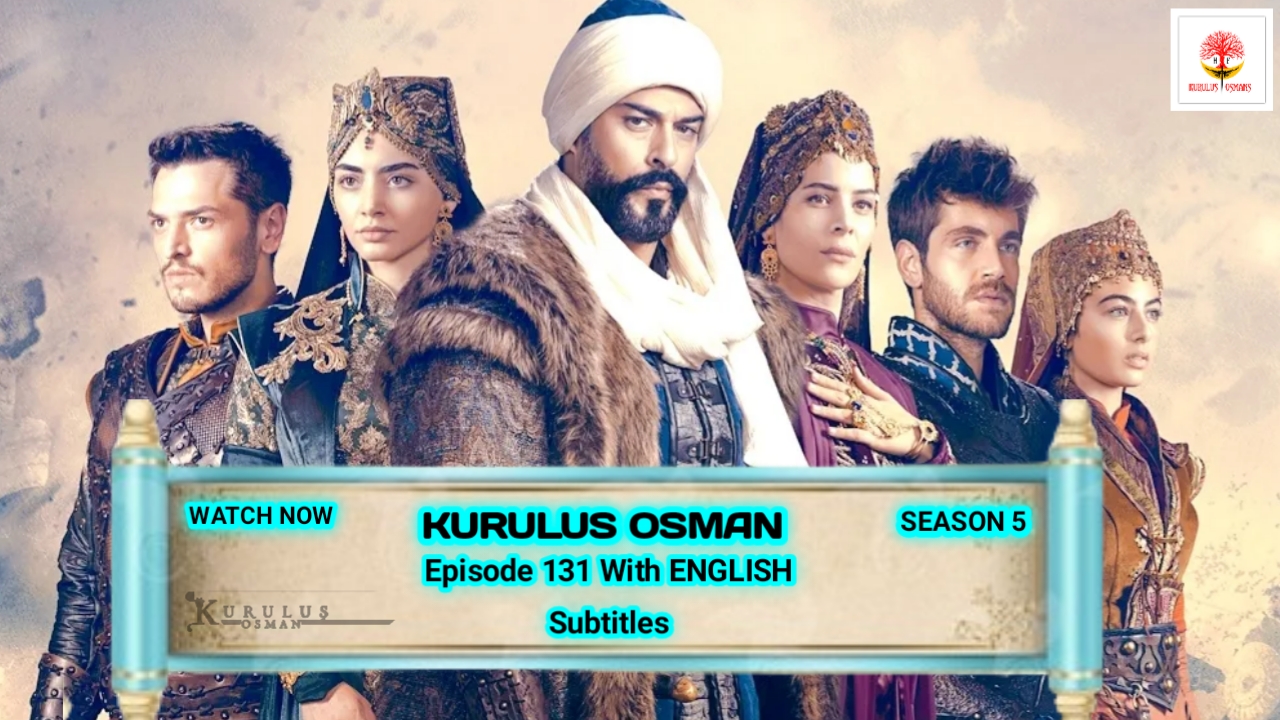
Kurulus Osman Chapter 131
Kurulus Osman Chapter 131
The winds of history have once again shifted in Anatolia as the political and military landscape enters a period of unprecedented upheaval. In this comprehensive analysis of Kurulus Osman Chapter 131, we will explore key events that mark the transition of power, the struggles of leadership, and the unfolding of personal tragedies that shape the future of the emerging Turkish state. This chapter stands as a pivotal moment where courage, ambition, and hidden agendas intertwine.
The Aftermath of the Bafeus Victory
Several years have passed since the monumental victory at Bafeus. Osman Bey’s sons have matured into respected leaders in their own right, and Osman Bey himself continues his relentless campaign aimed at expanding Turkish dominion, driven by the long-standing aspiration to capture the strategic city of Bursa.
Throughout these years, Malhun Hatun remains a steadfast pillar of support for Osman Bey, both in his political ambitions and military pursuits. The central question in this chapter becomes: Which fortress will Osman Bey target first in his campaign to claim Bursa?
This decision not only reflects strategic military calculations but also sets the tone for future confrontations in the region.
The Struggle for the Anatolian Throne
A sudden and shocking piece of news disrupts the calm in the palace: Sultan Mesud has been poisoned. This event triggers a fierce rivalry as various Anatolian lords begin to contend for the vacant sultanic title. The announcement of Sultan Mesud’s demise spreads like wildfire, igniting political ambitions far and wide.
An intense struggle begins, where each contender seeks to consolidate power by rallying support from influential tribal leaders, local beys, and religious authorities.
Key Contenders for Power:
| Candidate | Base of Support | Political Strategy |
|---|---|---|
| Osman Bey | Western Anatolia | Military expansion and alliances |
| Yakup Bey | Germiyan region | Market-centered influence and strategic marriages |
| Other Beys | Scattered Anatolia | Varies according to local power dynamics |
The Heartbreak of Bala Hatun
Bala Hatun faces a profound personal tragedy. Following the death of Halime, she remains consumed by grief and suffers from a serious illness that casts uncertainty over her future. Her suffering highlights the personal cost of political struggles, showing that behind the conquests and political moves, individuals bear heavy emotional burdens.
“History is not only the story of kings and wars, but also of personal losses and silent sacrifices.”
The chapter poignantly explores whether Bala Hatun will recover, drawing attention to the human side of historical upheavals.
An Assassination Attempt on Yakup Bey
A critical event unfolds in Yenişehir and Germiyan territories when a large marketplace is established by Yakup Bey to strengthen regional influence. Amid the bustling trade, a covert attempt is made on Yakup Bey’s life.
The assassin bears the mark of Kayı, hinting at a conspiracy that reaches deep within the Anatolian political structure.
This attempt raises significant questions:
- Who is behind this act?
- Is this an attempt to disrupt the fragile power balance?
- Will Yakup Bey retaliate, turning the competition for sultanic power into a blood feud?
The tension between Osman Bey and Yakup Bey deepens, suggesting the emergence of a conflict that may redefine the region’s history.
The Secret Enemy: Vasilis
As the Anatolian Beys seek a new sultan, a hidden adversary lurks in the shadows—Vasilis. His ambitions are far from noble. Determined to revive the remnants of the Roman Empire, Vasilis employs treachery, manipulation, and dark schemes to destabilize the Turkish beyliks.
His plans involve intricate espionage, bribery, and fomenting dissent among the beys.
The chapter illustrates the geopolitical complexity of Anatolia, where external and internal threats intertwine, making the path to stability even more perilous.
Alaeddin Bey and Gonca Hatun: Political Intrigue and Personal Motives
In light of Sultan Mesud’s poisoning, Osman Bey dispatches his son, Alaeddin Bey, to Konya, aiming to influence the succession process. At the same time, Gonca Hatun, daughter of Yakup Bey, arrives in Konya under mysterious circumstances.
This raises several key questions:
- What are their personal and political motives?
- Are they allies or adversaries in this unfolding drama?
Their interaction marks a chapter rich in political intrigue, where ambition clashes with personal relationships. Their alliance or rivalry could tip the scales of power.
Orhan Bey’s Encounter with the Sancaksızlar
The weakening of Konya leads to unrest, allowing disorganized fighters known as Sancaksızlar to settle in the border regions (Uçlar). Orhan Bey seizes this opportunity to rally these fighters, inviting them to join the gaza (holy struggle) under Osman Bey’s banner.
This alliance represents a significant strategy, aimed at consolidating power by incorporating independent groups into a larger political entity. However, the news of Orhan Bey’s actions soon reaches Mehmet, the son of Yakup Bey, stirring further tension in the power struggle.
The Arrival of Yunus Emre: A Beacon of Spiritual Change
In the midst of political turbulence, a spiritual figure emerges—Yunus Emre, a celebrated poet and mystic. His arrival in Yenişehir offers a breath of hope and philosophical reflection amid conflict.
Yunus Emre’s poetry and teachings begin to influence the hearts of Osman Bey and his family, guiding them toward a deeper understanding of leadership and moral responsibility.
“The true strength of a leader is measured not only by the battles won but by the compassion and wisdom they embody.”
His presence emphasizes the interplay between political power and spiritual enlightenment, highlighting the complex layers of Anatolian society at the time.
Conclusion: A Chapter of Transition and Complexity
Kurulus Osman Chapter 131 offers a profound narrative of political ambition, personal tragedy, and covert conspiracies. As Anatolia stands at the crossroads of destiny, the ambitions of Osman Bey and Yakup Bey represent more than a mere contest for power—they reflect the evolving identity of a nascent Turkish state.
This chapter demonstrates that history is not just about battles and leaders but also about the silent sacrifices, the hidden motives, and the unseen forces that shape the course of civilization.
Key Takeaways
- Sultan Mesud’s death triggers a fierce competition for leadership.
- Bala Hatun’s illness symbolizes the personal cost of political ambition.
- The assassination attempt on Yakup Bey highlights deep political conspiracies.
- Vasilis acts as a secret enemy aiming to revive old empires.
- Spiritual guidance from Yunus Emre emerges as a key influence.
- Alliances with disorganized fighters reflect strategic political moves.
FAQ
Q1: What is the historical significance of Kurulus Osman Chapter 131?
A1: This chapter marks a pivotal moment where internal rivalries and external threats collide, shaping the trajectory of the early Turkish state in Anatolia.
Q2: Who are the key figures in this chapter?
A2: Osman Bey, Bala Hatun, Yakup Bey, Alaeddin Bey, Gonca Hatun, and the poet Yunus Emre play significant roles, each contributing to the unfolding political and personal drama.
Q3: Why is Yunus Emre important in this context?
A3: Yunus Emre introduces a spiritual perspective that balances the political conflict, emphasizing compassion, wisdom, and moral leadership.
Q4: How does the poisoning of Sultan Mesud impact the region?
A4: It initiates a power vacuum, intensifying political rivalries and triggering new alliances and betrayals among the Anatolian Beys.