
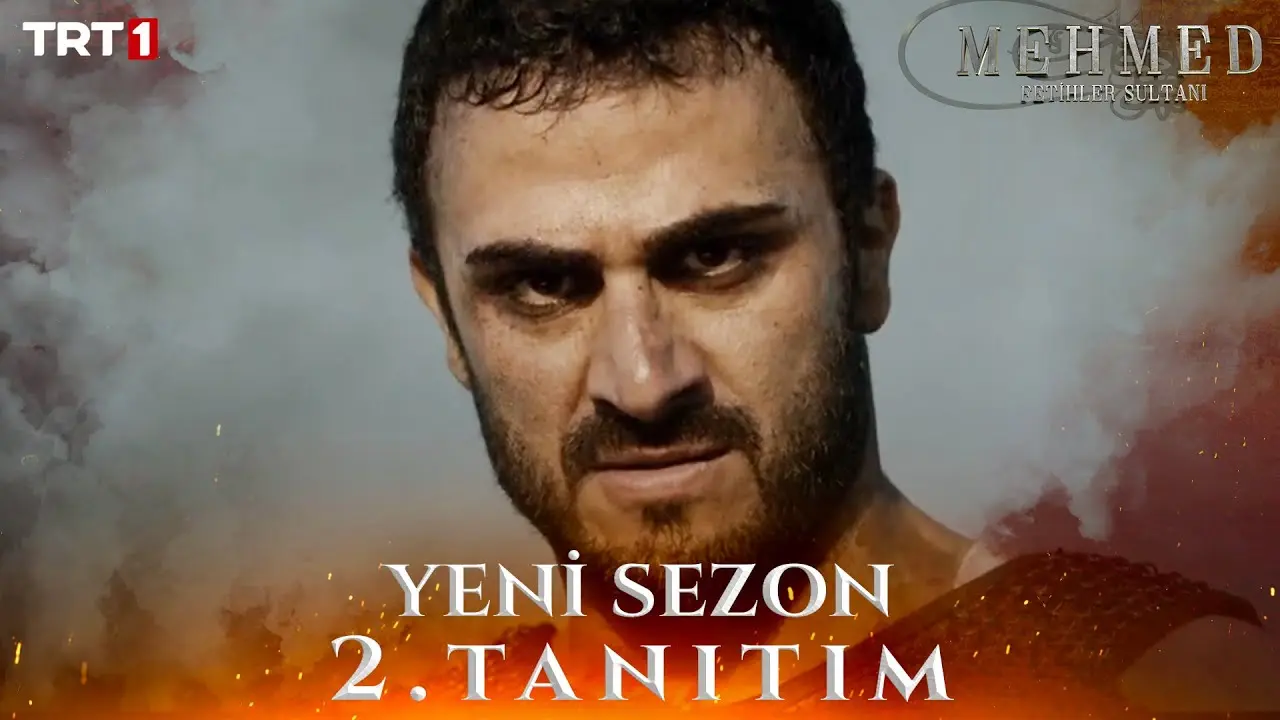
Mehmed Fetihler Sultanı Season 3 Trailer 2 With English Subtitles
Table of contents
- Mehmed Fetihler Sultanı Season 3 Trailer 2 With English Subtitles
- The Vision of Conquest: A Legacy Unfolds
- The Role of Strategic Diplomacy
- The Power of Intelligence in Warfare
- Janissaries: The Elite Force
- Uniting the Turkish and Islamic Worlds
- The Symbolism of the Sword
- The Struggle for Pontus
- The Shehzaade’s Role in Governance
- The Prophecy and Historical Impact
- Conclusion: The Legacy of Sultan Mehmed Khan
- FAQ
Mehmed Fetihler Sultanı Season 3 Trailer 2 With English Subtitles
The story of Sultan Mehmed Khan, known as the Father of Conquests, is one of the most remarkable chapters in the history of empires. His unwavering ambition and military brilliance shaped the course of civilizations. The newly released Mehmed Fetihler Sultanı Season 3 Trailer 2 with English Subtitles captures the spirit of a pivotal era in history where the fate of great cities, mighty empires, and religious legacies hung in the balance. This analysis dives deep into the historical and dramatic elements of the trailer, providing readers an enriching perspective on the Ottoman Empire’s significant conquests.
The Vision of Conquest: A Legacy Unfolds
At the heart of this narrative lies a strong vision: the unstoppable march of Sultan Mehmed Khan toward the conquest of the last bastions of Rome. The phrase “Until the last castle of Rome falls, the lions of Allah will not stop” illustrates an era driven by divine purpose and relentless strategy. The trailer vividly depicts the clash of civilizations, with the Ottoman forces preparing for a significant military expedition against Pontus, historically a powerful Byzantine province.
“The last room is the red globe, that is, the Vatican,” indicates the intense focus on both territorial and religious centers of power. Such imagery draws attention to the complex relationship between political ambition and religious ideology during that period.
The Role of Strategic Diplomacy
Beyond warfare, Sultan Mehmed’s era was marked by intricate diplomacy. The trailer hints at potential internal conflicts, especially the tension surrounding Ibrahim Bey’s alliance with Pontus. The question raised. “Will we prevent Ibrahim Bey’s kinship with Pontus?” suggests an internal struggle between loyalty to the Sultanate and personal ambitions, highlighting the intricate web of political relationships at the time.
Table: Key Players in the Mehmed Khan’s Campaign
| Name | Role | Historical Importance |
|---|---|---|
| Sultan Mehmed Khan | Ottoman Ruler | Father of Conquests, Architect of Expansion |
| Ibrahim Bey | Rebel Ally Candidate | Potential Internal Threat to the Empire |
| Princess Julia | Spy within Pontus | Instrumental in gathering crucial intelligence |
| Janissaries | Elite Military Unit | Backbone of Ottoman Military Expeditions |
The Power of Intelligence in Warfare
One of the most striking moments in the trailer is the revelation that Princess Julia acts as a spy. The concept of espionage was essential in medieval warfare, with spies playing crucial roles in shaping battles and diplomatic negotiations. This reflects how knowledge and covert operations influenced the fate of empires far beyond the battlefield.
“The property of the state depends on you too,” a significant line emphasizing that every individual has a role in the empire’s survival, not just the soldiers. It resonates with the historical reality that every citizen, from nobles to ordinary workers, contributed to the empire’s strength.
Janissaries: The Elite Force
The Janissaries, described as the Sultan’s most trusted military unit, are central to this narrative. Their preparation for the expedition symbolizes the disciplined, highly organized nature of the Ottoman military machine. Historically, the Janissaries were known for their advanced training, strategic expertise, and unwavering loyalty, playing a crucial role in expanding the empire’s frontiers.
List: Key Characteristics of Janissaries
- Highly Trained in combat and strategy
- Loyal to the Sultan, forming an elite guard
- Instrumental in Conquests across Europe and Asia
- Key Role in Intelligence Gathering
- Prominent in Religious and Political Affairs
Uniting the Turkish and Islamic Worlds
An important theme from the trailer is the ambition of uniting the Turkish and Islamic worlds. The statement “If all the Turkish and Islamic worlds become one, this world will be enough for all of us” reflects Sultan Mehmed’s vision for a united, powerful empire. This ideology was not merely about territorial expansion but about consolidating a cultural, religious, and political identity.
This brings a historical context where the Ottoman Empire saw itself as a successor to previous Islamic empires, holding the legacy of both governance and religious stewardship.
The Symbolism of the Sword
The trailer states, “The sword will come lighter than a feather.” This metaphor encapsulates the perceived inevitability of Ottoman military success. Historically, Ottoman campaigns combined advanced military technology, strategic prowess, and psychological warfare, giving them a significant advantage over their opponents.
Italicized Quote: “A sword is not just steel; it is a symbol of power, unity, and destiny.”
This reminds readers that every military conquest was deeply interwoven with a sense of divine destiny and state duty.
The Struggle for Pontus
Pontus, as highlighted in the trailer, represents more than just a military target, it stands for the cultural and religious heart of Byzantine power. The complex relationship between the Ottomans and Pontus shows how these military campaigns were both battles of ideology and geopolitics.
The character of Princess Julia, as an insider spy, emphasizes the historical role women sometimes played in high-level intelligence and diplomacy, often underrepresented in history books.
The Shehzaade’s Role in Governance
The trailer briefly mentions “Our shehzaade is now here to be found”, alluding to the heir of the Sultan. In Ottoman governance, the shehzaade (prince) was not merely a successor but a key political and military figure. Groomed from childhood, the shehzaade’s education was designed to prepare him for the responsibilities of rulership, military leadership, and diplomacy.
The Prophecy and Historical Impact
The persistent theme throughout the trailer is the prophecy-like ambition of Sultan Mehmed Khan to not stop until the complete fall of Roman authority. This narrative adds a sense of inevitability and historical determinism, blending drama with the true historical ambition of the Ottomans.
Watch Mehmed Fetihler Sultanı Season 3 Trailer 2 With English Subtitles Below
MFSS3E50T3WES pic.twitter.com/XCikWB5c1H
— Osman Onlines (@OsmanOnlines) September 13, 2025
Conclusion: The Legacy of Sultan Mehmed Khan
The Mehmed Fetihler Sultanı Season 3 Trailer 2 with english Subtitles is far more than a historical drama; it is a narrative of ambition, strategy, faith, and political complexity. Sultan Mehmed Khan’s relentless pursuit of expansion reflects the historical reality of one of the most influential rulers in world history. His campaign against Pontus symbolizes not just a military conquest but a unifying ideological mission to bring the Turkish and Islamic worlds into one cohesive empire.
Key Takeaways
- Sultan Mehmed Khan was a visionary ruler with deep political and religious ambitions.
- The role of espionage, especially Princess Julia’s, highlights the complex intelligence networks of the time.
- Janissaries played an instrumental role in shaping the empire’s destiny.
- The struggle for Pontus was both a military and ideological battle.
- The theme of destiny and prophecy adds depth to the narrative.
FAQ
Sultan Mehmed Khan was known as the Father of Conquests, a prominent Ottoman ruler responsible for expanding the empire’s borders and shaping Islamic and Turkish political identity.
Pontus represented a Byzantine stronghold that symbolized both cultural and religious opposition to the Ottomans. Its conquest was crucial for the empire’s territorial and ideological consolidation.
Janissaries were the elite military corps of the Ottoman Empire, serving as both the Sultan’s guard and the backbone of military expeditions due to their advanced training and discipline.