
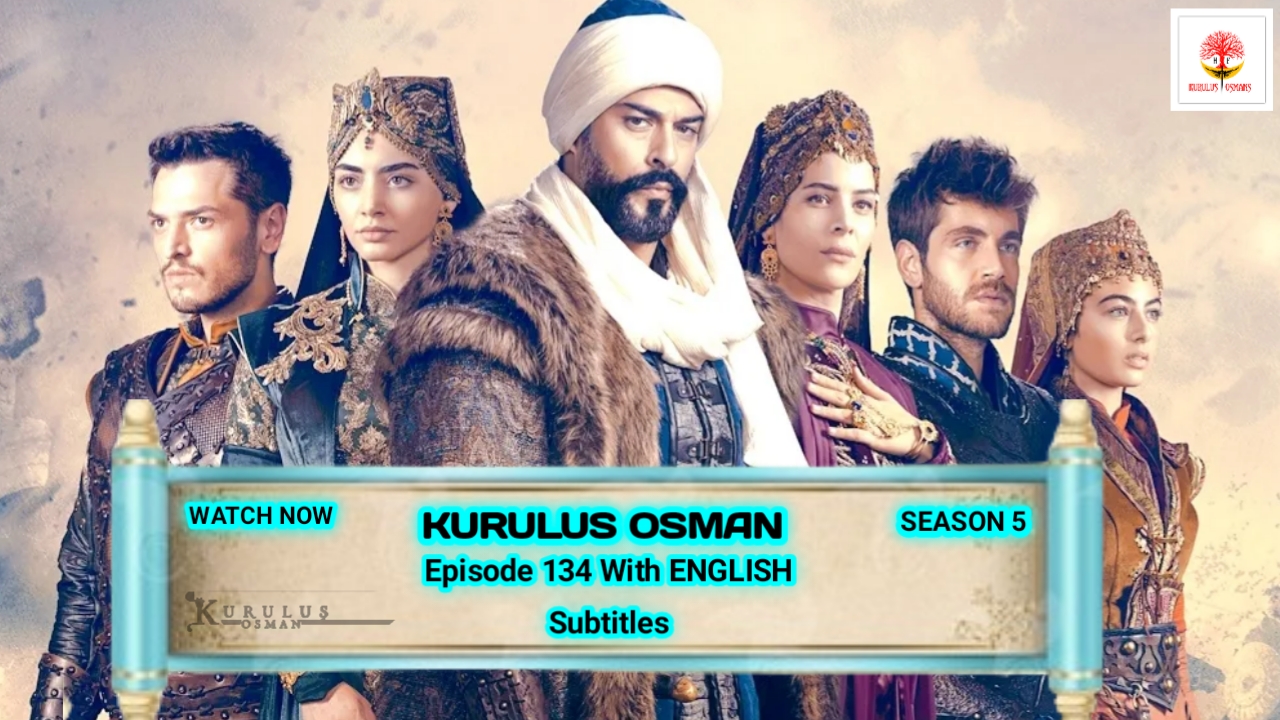
Kurulus Osman Chapter 134
Kurulus Osman Chapter 134
The legendary rise of Osman Bey is not merely a tale of conquests and battles but a story of intricate political maneuvers, secret rivalries, and masterful strategies. In Kurulus Osman Chapter 134, key events unfold that shape the future of the Ottoman Empire, offering history enthusiasts a deep insight into the struggles for power and influence in the early 13th century Anatolia.
1. The Battle for Lefke Fortress: Yakup Bey’s Hidden Agenda
One of the most significant power plays in this chapter involves Lefke Fortress, a strategic stronghold located at the borderlands of Anatolia. Previously under Yakup Bey’s control, the fortress was seized before Osman Bey could make his move. Yakup Bey claims to have voluntarily handed over the fortress to Osman Bey, presenting it as a gesture of allegiance.
However, Osman Bey remains cautious, suspecting a sly and calculated strategy beneath Yakup Bey’s generous offer. Historical context suggests that such political gestures often mask ulterior motives—perhaps a trap designed to entangle Osman Bey in internal disputes or weaken his position before confronting greater external threats.
| Figure | Role | Action |
|---|---|---|
| Yakup Bey | Rival Commander | Captured Lefke Fortress early |
| Osman Bey | Founder of the Ottoman Empire | Evaluates the legitimacy of Yakup Bey’s offer |
The key question arises: Will Osman Bey accept Lefke Fortress, knowing well the dangers of hidden political schemes?
2. A New Foe in the Borderlands: Üstad Gera
As Kurulus Osman progresses, a new, enigmatic adversary emerges. Üstad Gera, the master of Vasilis—a cunning and ruthless military tactician—makes his appearance. Gera cleverly hides his true identity and approaches Osman Bey under the disguise of a merchant.
Osman Bey, known for his sharp political instincts, invites this merchant to Yenişehir. His intentions are clear: to scrutinize the real purpose of Gera’s presence. The clash between Osman Bey and Üstad Gera is not merely physical but a contest of intellect and strategy.
This scenario reflects the period’s political atmosphere, where diplomacy, trade, and espionage often intertwined with open warfare. The presence of hidden enemies complicates the seemingly straightforward battle for territorial expansion.
3. Boran Bey: A Trust Betrayed?
Among Osman Bey’s closest confidants is Boran Bey, a trusted and loyal warrior. The arrival of Üstad Gera triggers an immediate threat: the assassination of Boran Bey. As tensions escalate, a critical question emerges—will Vasilis succeed in eliminating Osman Bey’s right-hand man?
Historical records often emphasize the fragility of alliances in the medieval Anatolian context. The story highlights how trusted relationships could swiftly turn into political liabilities. The betrayal of a loyal commander signifies not only personal loss but a destabilizing blow to Osman Bey’s growing power.
4. Malhun Hatun’s Calculated Gambit
Amidst this atmosphere of suspicion, Malhun Hatun, a significant female figure in Osman Bey’s life, uncovers a subtle conspiracy. Aware that Saadet Hatun harbors ill intent, Malhun Hatun prepares a strategic countermeasure.
Her actions reflect a common theme in history—how women, often operating in the background, influenced political outcomes. Through deft strategy and careful manipulation, Malhun Hatun turns the tide, ensuring that Saadet Hatun’s ploys backfire.
5. Orhan Bey’s Secret Plan: Disguise and Deception
Orhan Bey, an ambitious and sharp-witted character, orchestrates a daring strategy to secure a crucial treasure. He assumes the guise of a Mongol soldier to infiltrate enemy ranks. While successful in his primary objective, he unexpectedly injures Mehmet Bey, raising new uncertainties.
This event demonstrates the risks inherent in power plays: hidden identities, mistaken attacks, and unintended consequences. The complex layers of strategy reflect a broader historical reality where disguises and misinformation played vital roles in securing power.
6. The Final Confrontation: Osman Bey vs. Yakup Bey
In a climactic scene, Osman Bey and Yakup Bey face each other once more. Yakup Bey offers his allegiance for the last time, seeking to reconcile or perhaps manipulate Osman Bey into submission.
Osman Bey’s answer becomes symbolic—not merely a rejection or acceptance of Yakup Bey’s offer but a declaration of his vision for an independent and strong Anatolian principality. His response reverberates as a decisive moment in his journey toward founding the Ottoman Empire.
7. The Political Dynamics of Kuruluş Period Anatolia
During the 13th century, Anatolia was a patchwork of fragmented principalities, each vying for dominance. The Kuruluş Period reflects an era where alliances were fragile, and conflicts often concealed deeper political agendas.
Key characteristics of the period include:
- Frequent betrayals and shifting loyalties
- Use of espionage and secret alliances
- Marriage as a political tool
- Cunning use of trade routes for strategic advantage
These dynamics underline the complexity of Osman Bey’s challenges as he navigated through both internal intrigues and external pressures.
8. Key Takeaways from Kurulus Osman Chapter 134
- Political Strategy Over Warfare: Osman Bey demonstrates that strategy and intelligence are as critical as brute force.
- Women in Power Plays: Figures like Malhun Hatun played crucial, though often understated, roles in shaping political outcomes.
- Shifting Alliances: The fluctuating loyalty of commanders and tribal leaders reflects the volatile political environment of the time.
- Disguise and Subterfuge: Orhan Bey’s actions highlight how appearances can be deceptive in political struggles.
9. Quotes from Kurulus Osman Chapter 134
“In the shadow of every alliance lies the potential for betrayal.”
– Historian’s reflection on the Kuruluş Period.
“True power lies not in the sword but in the mind that wields it.”
– Osman Bey’s strategic philosophy.
10. Frequently Asked Questions (FAQ)
Q1: Who is Yakup Bey in Kurulus Osman?
A1: Yakup Bey is a rival commander who attempts to manipulate Osman Bey by presenting the Lefke Fortress as a gift, though his true motives remain suspicious.
Q2: What role does Üstad Gera play in the story?
A2: Üstad Gera is the master of Vasilis and poses a significant threat by hiding his identity and plotting against Osman Bey.
Q3: How does Malhun Hatun contribute to the story?
A3: Malhun Hatun skillfully counters Saadet Hatun’s conspiracy, showcasing the important role of women in the political dynamics of the time.
Q4: What is the significance of Orhan Bey’s disguise?
A4: It symbolizes the use of clever tactics and disguise in achieving political and military goals during turbulent times.
Conclusion
Kurulus Osman Chapter 134 offers a rich tapestry of political intrigue, hidden agendas, and strategic battles that shaped the rise of Osman Bey and the early Ottoman Empire. The chapter does not simply narrate open conflicts but delves deep into the hidden battles of power, manipulation, and survival.
For history readers, this chapter provides an excellent study of how medieval Anatolian politics operated, highlighting the interplay between cunning strategy, personal ambition, and fragile alliances. The meticulous strategies employed by Osman Bey and his adversaries reflect a broader historical pattern—where intellect often outshone sheer military might.
This detailed insight reaffirms the significance of the Kuruluş period as a foundational era, setting the stage for the emergence of one of history’s most influential empires.